Support operations
The complaint arrived on Instagram. Now what?
Complaints do not arrive where your process expects them. How to handle multi-channel intake without staffing a support desk on five platforms.
Jayesh Shah · · 6 min read
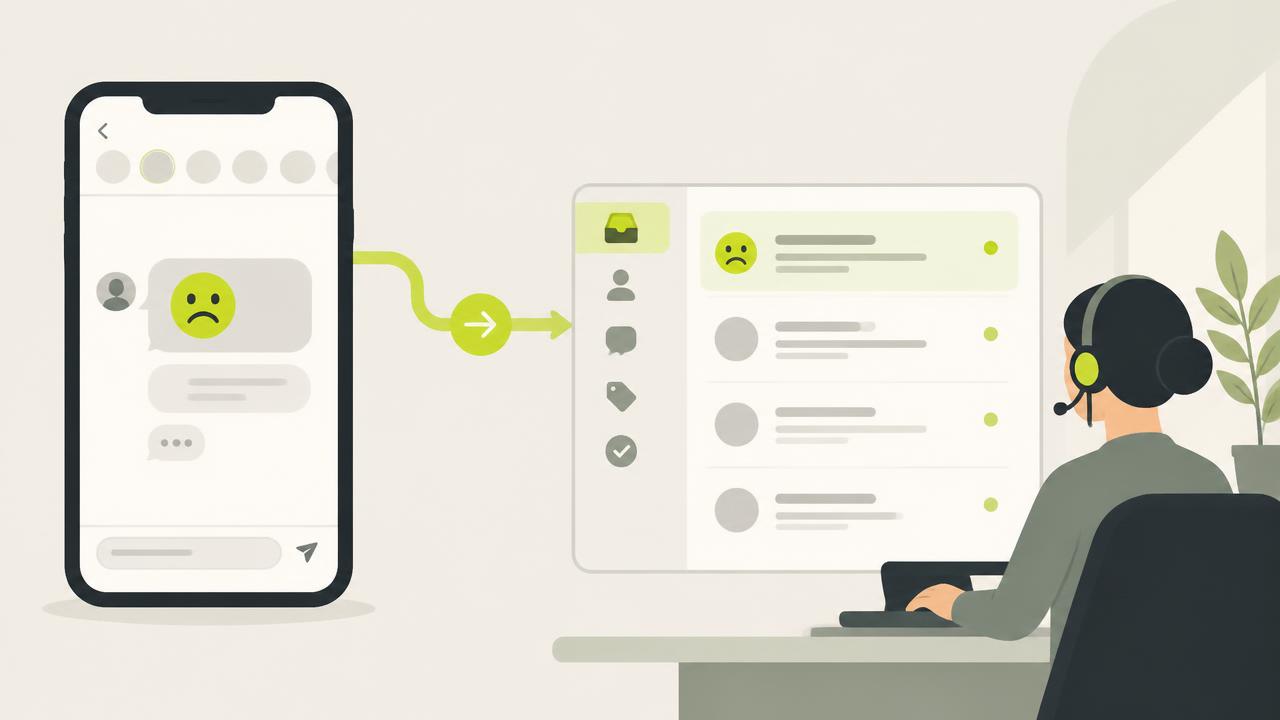
Your returns process assumes email. Your customer used Instagram. Neither of you is wrong, and the gap between the two is where complaints go to die.
For Indian D2C especially, the pattern is consistent: the purchase happens on the website, the question happens on WhatsApp, and the complaint happens wherever the customer last saw you — which is usually Instagram, often as a comment rather than a message.
You cannot make that stop. You can stop it costing you.
Separate the reply channel from the record
This is the whole idea, and everything else follows from it.
Reply where they contacted you. Sending a customer from a DM to a support portal to raise a ticket about a problem you caused is a second complaint in the making. If they wrote on Instagram, answer on Instagram.
Record it in one place. The reply channel is theirs to choose. The record is yours, and it should be identical no matter where the conversation happened.
Once you separate these two things, multi-channel support stops being a staffing problem and becomes a logging habit.
The thirty-second log
When something arrives outside your normal channel, log it before you reply. Five fields, the same ones every time: order number, what went wrong in their words, channel, owner, status. Then go and answer them.
Doing it before you reply matters, because after you reply the urgency drops and it does not get logged.
Getting the order number without an interrogation
The hardest part of a DM complaint is identification. "My order arrived damaged" from a handle you do not recognise, with no order number, is not actionable, and asking for one can read as bureaucratic when someone is already annoyed.
Three approaches, in order of preference:
Ask for one detail, not four. "Sorry about this — what's the email you ordered with?" One question, answerable in three words, and enough to find the order.
Send them a link to a form. Not as a deflection, as a shortcut. "I can sort this now — this form gets me the details fastest, takes thirty seconds." A short form with order lookup does the identification for you and gives you a clean record at the same time. It works because it is framed as speed, not process.
Look them up yourself. If their handle matches a name on a recent order, find it and open with "I can see order 10482 delivered on Tuesday — is that the one?" That single sentence converts an angry customer into a co-operative one faster than anything else you can do.
Comments are different from messages
A public comment has an audience. Handle it in two moves:
Reply publicly, once, briefly, taking responsibility and offering the fix. Then move to DM for the detail. Do not conduct the resolution in the comments — it looks worse the longer it runs, even when you are being reasonable.
Never delete a genuine complaint comment. It reliably makes things worse and the customer usually has a screenshot.
WhatsApp needs a rule
WhatsApp is the hardest channel because it feels personal and it does not close. Conversations stay open, they reopen weeks later, and there is no natural end.
Two rules make it workable. First, a complaint on WhatsApp gets logged like any other — the informality of the channel does not make it informal. Second, close the loop explicitly: "That's the replacement dispatched, arriving Thursday. Anything else on this one?" gives the conversation an ending that both sides recognise.
What you do not need
You do not need a support agent on every platform, an omnichannel suite, or a chatbot on five channels. For a small team, all of that is expensive and premature.
What you need is one log, one habit, and a form you can send someone in a DM when identification is slowing things down.
The signal that you have outgrown this
Move to a tool when one of three things is true: more than one person is answering, the same customer's history across channels starts mattering, or you cannot answer "what is open right now" without asking someone. Until then, the habit is the system.
SupportHub Helpdesk gives you a complaint form with order lookup you can send into any channel, and a single dashboard behind it.